Vserve AI

AI Model Fine-Tuning

AI Model Fine-Tuning

AI model fine-tuning services adapt pre-trained foundation models to your domain, your formats, and your policies. Our engineers run supervised fine-tuning, parameter-efficient adapters such as LoRA and QLoRA, and preference tuning, then measure every run against a prompting baseline on held-out data. AI Model Fine-Tuning serves Ecommerce, Manufacturing, Logistics, and Industrial Distribution. Work starts with your dataset, not with the algorithm.
Name

Official Odoo Implementation Partner

Odoo has chosen Vserve Ai as an implementation partner, recognising our technology and operational expertise to deliver business-ready Odoo solutions.

The Vserve AI Advantage 

AI, Data Scientists & Engineering Experts
0 +
Custom LLMs & AI Models Developed
0 +
AI-Powered Business Workflows Automated
0 +
Enterprise AI Integrations Delivered
0 +

Our End-to-End AI Model Fine-Tuning Services

Fine-tuning turns a general-purpose model into a domain specialist that follows your terminology, formats, and policies, and we own the full build from dataset curation through evaluation and production serving.

Fine-Tuning Readiness Assessment

Every training programme starts by deciding whether fine-tuning is genuinely the right answer, defining the target behaviour, and agreeing the metric the tuned model must beat.

Dataset Preparation and Curation

Your domain examples are collected, deduplicated, checked for quality, and split into training, validation, and held-out sets, with clear labelling guidance and yield targets.

Supervised Fine-Tuning

Pre-trained models are retrained on task-specific instruction pairs so outputs follow your formats, policies, and domain reasoning without brittle prompt scaffolding.

Parameter-Efficient Fine-Tuning

Adapter-based methods such as LoRA and QLoRA tune a small fraction of weights, cutting compute and memory while keeping behaviour changes reversible and composable for production.

Preference and Alignment Tuning

Preference techniques align tuned behaviour with human judgement, tone, and safety choices, reducing unwanted outputs before the model reaches production.

Model Evaluation and Benchmarking

Scoring on held-out data tracks accuracy, format compliance, latency, and regression against the baseline, with benchmarks that decide whether a run ships.

Quantisation and Inference Optimisation

Fine-tuned weights are merged, quantised, and served through production inference paths so latency and cost per request meet agreed targets.

Fine-Tuning Governance and Lifecycle

Retraining, versioning, and monitoring controls are set so tuned models stay current as data, policies, and base versions move.

Build Production Fine-Tuning With Us

Choose our AI model fine-tuning services to tune a model that reliably follows your domain language and formats without stacking fragile instructions. Start from your dataset, not the framework.

Industry-Focused AI Model Fine-Tuning
Tuning is built around the language your industry actually uses, so the model fits real terminology, formats, and review standards.
01
AI Model Fine-Tuning for Ecommerce

Tuned models learn catalogue language, return reasons, and customer tone so support and merchandising decisions stay consistent at scale.

02
AI Model Fine-Tuning for Manufacturing

Plant terminology, defect codes, and maintenance histories shape the training set, so the tuned model reads shop-floor language accurately.

03
AI Model Fine-Tuning for Logistics and Supply Chain

Carrier documents, exception codes, and route histories train models that classify and summarise network events without manual review.

04
AI Model Fine-Tuning for Industrial Distribution

Supplier catalogues, quote patterns, and pricing rules adapt models to distributor workflows and customer-specific formats.

Plan Your AI Model Fine-Tuning with Our Experts

A tuning engagement begins with a dataset and an accuracy target, and ends with a model that meets both. We review your examples, confirm whether tuning is the right route, and agree the metric the model must beat.

What Happens When You Book a Call:

Our AI technology expertise spans the latest frameworks, models, and platforms, enabling us to build secure, scalable, and enterprise-ready AI solutions for complex business challenges.

[ 1 ] Machine Learning (ML)

Build smarter systems that learn from data, identify patterns, and improve decision-making through advanced machine learning models tailored to your business needs.

Explore Machine Learning Solutions

[ 2 ] Generative AI

Create intelligent applications that generate content, automate workflows, and deliver personalized experiences using powerful generative AI capabilities.

Build with Generative AI

[ 3 ] Agentic AI

Develop autonomous AI agents that can understand goals, make decisions, and execute complex tasks to improve productivity and business operations.

Discover Agentic AI Solutions

[ 4 ] Retrieval-Augmented Generation (RAG)

Enhance AI accuracy by connecting intelligent models with your business data to deliver relevant, context-aware responses and insights.

Implement RAG Solutions

[ 5 ] Deep Learning

Leverage advanced neural networks to solve complex challenges involving images, language, automation, and large-scale data analysis.

Explore Deep Learning Services

[ 6 ] Natural Language Processing (NLP)

Enable machines to understand, analyze, and respond to human language with AI-powered solutions for communication and automation.

Transform Your Business with NLP

[ 7 ] Predictive Analytics

Use AI-driven analytics to forecast trends, identify opportunities, and make proactive decisions with data-backed insights.

Unlock Predictive Analytics

[ 8 ] Data Capture & OCR

Automate data extraction from documents, images, and forms with intelligent OCR solutions that improve accuracy and reduce manual effort.

Automate Data Processing

[ 9 ] Robotic Process Automation (RPA)

Streamline repetitive tasks and optimize workflows with intelligent RPA solutions that improve efficiency and reduce operational costs.

Automate Your Processes

[ 10 ] Cloud AI & MLOps

Deploy, manage, and scale AI solutions efficiently with cloud-based AI platforms and MLOps practices designed for reliable performance.

Scale AI with Cloud & MLOps

AI Models We Integrate

ChatGPT

Anthropic

Meta AI

Grok

Amazon Bedrock

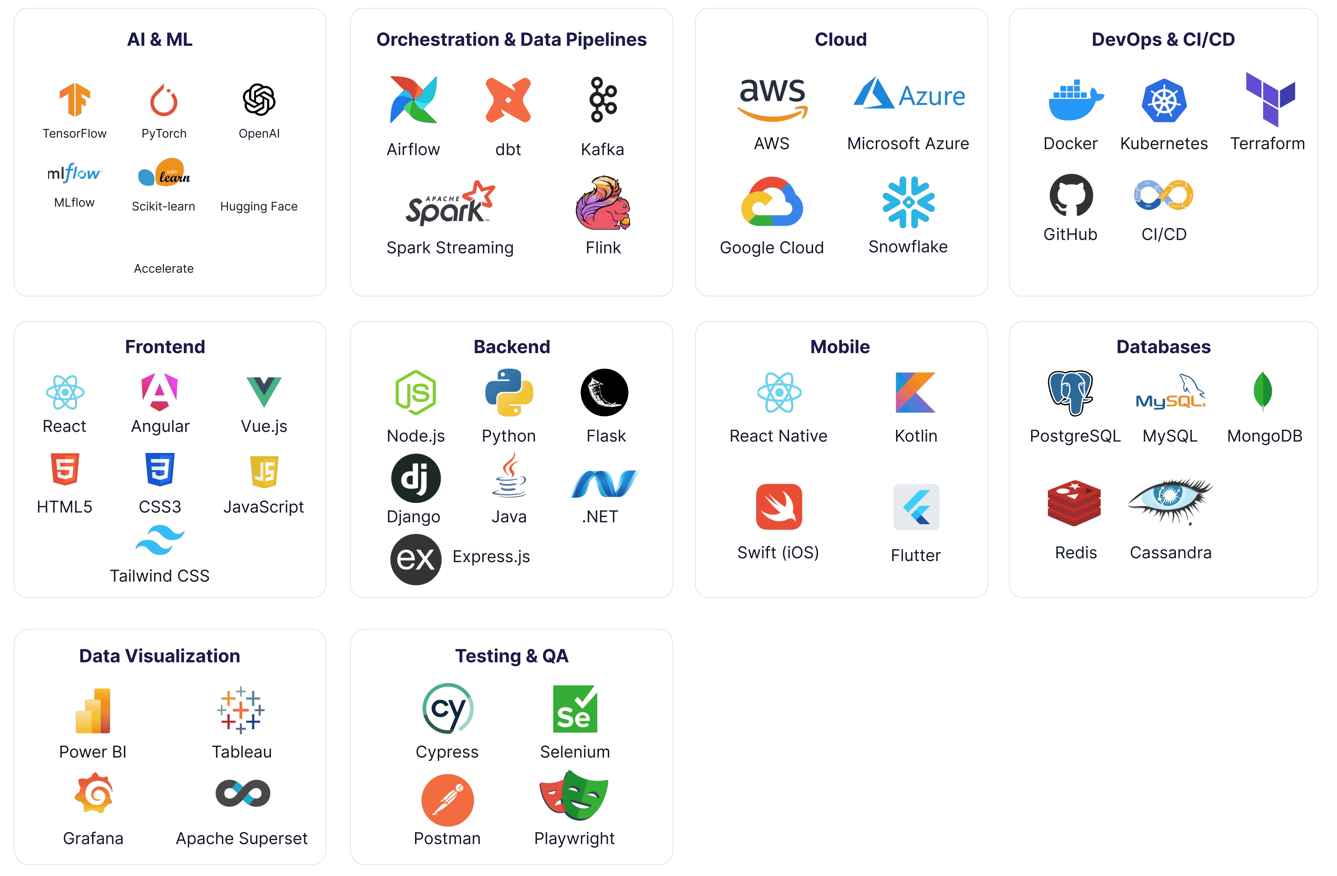
Our Technology Ecosystem
logs

Build Custom AI Solutions for Your Industry
Our AI Model Fine-Tuning Process

A six-stage path moves your data from raw examples to a tuned, monitored model in production, with evaluation gates that keep every release measurable.

Engagement Models for AI Model Fine-Tuning

Choose the engagement that fits your dataset maturity, from a fixed-scope adaptation with agreed metrics to an operated model lifecycle.
Co-Development Model
We work beside your data scientists and domain reviewers to curate datasets, run training, and judge results, combining your evidence with our tuning depth.
  • Joint curation of training data
  • Shared judgement on model quality
  • Evaluation harness stays in-house
  • Fits teams with domain reviewers
  • Best for repeatable tuning pipelines
We own the tuned model end to end, watching quality and serving cost, and extend the same pipeline to further tasks and teams.
  • Complete lifecycle ownership
  • Quality watched continuously
  • Serving cost tracked daily
  • Fits limited internal capacity
  • Extends across functions
One agreed dataset and one agreed accuracy target define the work, with price and evaluation date fixed before training starts.
  • Dataset fixed at kickoff
  • Technique agreed up front
  • Accuracy target set in advance
  • Best for single-task tuning
  • Ideal for first tuning build
Short cycles with a review each fortnight let the dataset, technique, and evaluation criteria improve together.
  • Dataset refined every cycle
  • Technique tuned on evidence
  • Evaluation reviewed fortnightly
  • Ideal for evolving requirements
  • Best for iterative tuning
A devoted group of ML engineers adapts and maintains your models as data, requirements, and base versions move.
  • Model ownership stays continuous
  • New base versions evaluated
  • Retraining scheduled in advance
  • Exclusive tuning engineers
  • Suited to multi-model estates

AI Model Fine-Tuning Business Impact

Teams that tune with us shorten the path from dataset to deployed model, spend less on inference at volume, and get behaviour that prompting alone cannot hold.
Ship Tuned Models Faster
Proven training and evaluation patterns move your model from dataset to production faster, with clear gates at each stage.
60%
Faster AI implementation
Reduce Tuning and Serving Spend
Adapter-based tuning and right-sized specialist models cut the compute and serving cost behind your adaptation work.
45%
Reduction in development costs
Built Around Your Domain
Integration, serving, and lifecycle patterns are already proven, so tuned models reach your teams sooner.
3X
Faster AI solution delivery

AI Development Case Studies Across eCommerce, Manufacturing, and Supply Chain

Explore how our tailored AI solutions turn complex operational challenges into measurable growth. From predictive logistics to personalized commerce, we bridge the gap between innovation and ROI.

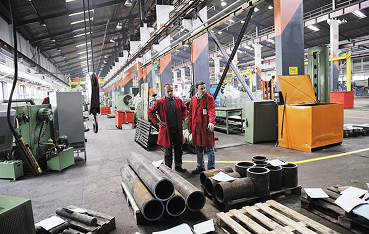
Intelligent Supply Chain Risk Management

A manufacturer reduced supply disruption response time by 73% using proactive AI agents.
A global manufacturer deployed autonomous AI agents to monitor supplier networks, geopolitical signals, and logistics data in real time. The system identified risks before they escalated, automatically rerouted procurement, and reduced operational downtime by 38% within the first quarter of deployment.
case study2

Autonomous eCommerce Personalisation at Scale

An eCommerce platform increased conversion rates by 41% through the deployment of AI agents.
A mid-market eCommerce retailer integrated AI agents to autonomously manage product recommendations, dynamic pricing, and abandoned cart recovery. The agents processed real-time behavioural signals and adapted content per user, delivering a 41% lift in conversions and a 28% increase in average order value.

Real-Time Logistics Route Optimisation

A logistics operator cut delivery costs by 34% using autonomous route-optimisation AI agents.
A regional logistics provider deployed AI agents to continuously process traffic data, weather signals, and delivery constraints, autonomously reassigning routes in real time. The result was a 34% reduction in fuel and carrier costs, a 22% improvement in on-time delivery rates, and a significant reduction in dispatcher workload.

Ready to Start Your Custom AI Solutions?

Bring a new idea or a complex operational challenge,
and we’ll engineer the right solution for you.

Frequently Asked Questions

What is AI model fine-tuning?
AI model fine-tuning adapts a pre-trained foundation model to your domain by retraining it on curated task-specific data, so outputs follow your terminology, formats, and judgement calls without fragile prompt scaffolding. It works best when behaviour must stay consistent at volume and when retrieval or prompting alone cannot hold accuracy, tone, or format. Every run we ship is measured on held-out data against a prompting baseline.
Fine-tuning is the right call when the model needs new behaviour that prompting cannot hold, your domain has specialised reasoning patterns generic models handle inconsistently, you need cheaper inference at scale by replacing a large generic model with a smaller specialist, or tool-calling reliability must improve. If the problem is knowledge retrieval from fast-changing documents, retrieval with a strong base model usually wins first. When you expect more than 100,000 requests a month, tuning often pays for itself in lower token cost.
Dataset size depends on method and task. Adapter methods such as LoRA often show gains with 1,000 to 10,000 curated examples per task, full weight tuning typically needs 10,000 to 100,000 or more, and preference tuning needs thousands of ranked pairs. Quality dominates quantity: clean, deduplicated examples with consistent labels beat a larger noisy set. We start by reviewing yield after deduplication and define the minimum viable set before the first training run.
Tuning programmes that cover readiness, dataset curation, training, evaluation, and production hardening usually run 2 to 8 weeks excluding labelling time. Short adapter runs can complete within a week once the dataset is ready, multi-GPU full tuning takes longer, and programmes with heavy annotation extend on the data side rather than the compute side. Our workflow moves from baseline in weeks 1 to 2 through deployment in weeks 9 to 10, with monitoring in weeks 11 to 12.
Cost depends on base model size, method choice, dataset size, and compute. LoRA-based tuning uses far less memory and trainable parameters than full tuning, adapter merging avoids retraining the base, and quantisation lowers serving cost afterwards. As a reference, managed LoRA training for a large open model is often quoted around the low tens of dollars per million training tokens, while inference for a well-tuned small specialist can be a fraction of a large frontier model. We provide a fixed or staged quotation after reviewing your dataset and requirements.
Retrieval pulls current facts from your documents at query time without changing model weights, while fine-tuning changes weights to embed behaviour, tone, and format into the model itself. Most production systems stack them: fine-tuning for stable behaviour and reasoning, retrieval for fresh or fast-changing knowledge. Retrieval adds latency and vector-database dependencies, tuning adds a training loop and retraining cadence. We review whether your task is knowledge-lookup or behaviour-change before recommending an approach.
Training data stays within the boundary you approve, whether that is your cloud account, a private tenancy, or an approved isolated environment. On cloud-hosted tuning we use the platform’s training hub and private endpoints so raw data does not leave the managed boundary, and we apply access controls and audit trails for every dataset version. Vendor-hosted fine-tuning where training data travels to a third party is only used when your policy allows it. After deployment we delete temporary artefacts to the schedule we agree.
Before training we fix a metric that directly reflects business behaviour, then record the base model’s prompting score on held-out data. Every training run is scored on that same held-out set for accuracy, format compliance, hallucination rate, latency, and cost per request. A release only ships when it beats the baseline by a material, repeatable margin without regressing on general capabilities. Evaluation harnesses and model comparison are kept as team-owned assets.
Yes. We tune open models such as Llama, Mistral, and Qwen and ship them on private infrastructure or managed dedicated endpoints, so weights and data remain in your account. Frameworks such as Axolotl for multi-GPU supervised tuning and TRL for preference training are selected by scale and objective, then adapters are merged and quantised for production serving. Vendor-hosted tuning for hosted frontier models is handled separately when your policy permits external data sharing. You receive model artefacts, evaluation results, and serving documentation.
Yes. We evaluate the current tuned model against your held-out data, diagnose whether gains stalled due to data quality, method choice, or evaluation design, and then apply targeted fixes to curation, configuration, or preference data. Retuning with cleaner labels, a different adapter rank, or a refreshed preference set often beats starting again. Deployment, merging, and lifecycle controls are updated at the same time so the improved model reaches production without downtime.

Still have questions about your AI model fine-tuning approach?

Scroll to Top

Complete the form to see the product demo

By submitting, I consent to receiving marketing communications and processing of my personal data per the privacy policy.